The OSI Model, Layer by Layer
This series breaks down the network layer by layer, from the cable all the way to the application. Seven layers, six articles, always the same promise: no theory for theory’s sake. Each layer comes with the commands that go with it, the failures it causes, and how to diagnose them—all tailored for those preparing for the TSSR professional certification or who simply want to understand what’s really going on under IP.
Why Read This in Order
The OSI model isn’t a list of seven boxes to memorize. It’s a stack, and each layer cleans up the mess left by the one below it: Layer 1 sends signals, Layer 2 assembles them into frames, Layer 3 routes them blindly, Layer 4 reassembles the pieces in order, and the top layer finally makes sense of the bytes. Let’s work our way up. Reading the articles in the order of the layers lets you see this mechanism being built brick by brick.
What Each Article Contains
They all follow the same structure:
- The Essentials in 30 Seconds (the sidebar you should read even if you don’t read anything else)
- The Mechanisms, explained—because knowing what you’re doing is definitely better
- Layer Security (each protocol was designed by honest people; that comes at a cost)
- The Toolkit (the commands that come up in practical scenarios)
- Common mistakes and what I’ve learned
Seven layers, six articles
A quick note on the number, since it might surprise you. The series covers the seven layers OSI, but in six articles—because layers 5 (session) and 6 (presentation) are phantom layers: they describe real functions, but neither has its own implementation in modern networks. Covering them together in a single article is more honest than padding out two separate texts. Hence the numbering: layers 1, 2, 3, 4, then a combined article for 5 and 6, followed by layer 7.
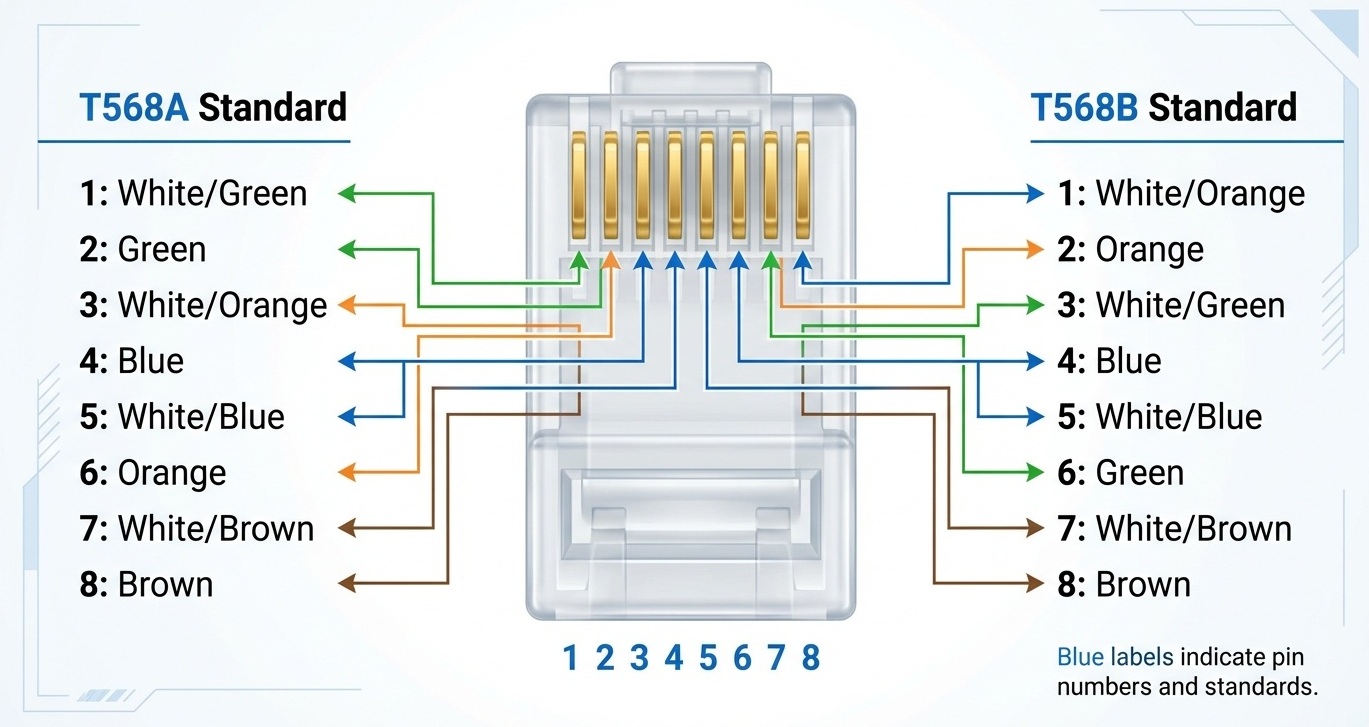
- Layer 1 — Physical: the RJ45 cable, the pairs, the connectors.
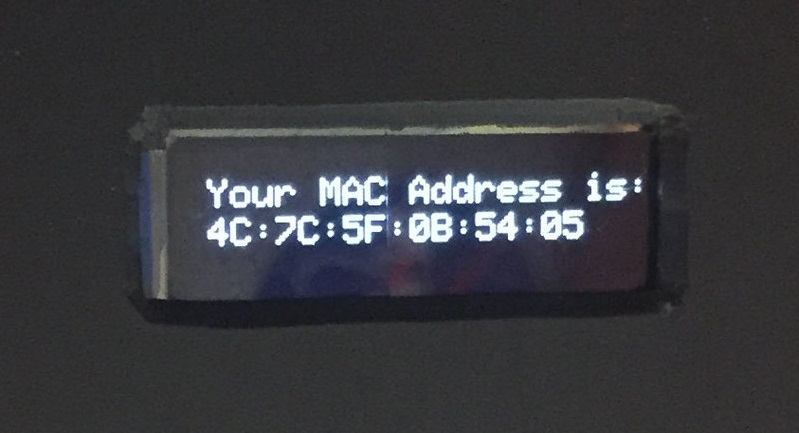
- Layer 2 — Link: MAC addresses, the CAM table, ARP.
- Layer 3 — Network: IP, addressing, and routing.
- Layer 4 — Transport: TCP, UDP, and ports.
- Layers 5 & 6 — Session & Presentation: the phantom layers.
- Layer 7 — Application: HTTP, DNS, DHCP, and the top of the stack.
OSI or TCP/IP?
A point that comes up repeatedly: we refer to the 7-layer OSI model as a framework for understanding, because that’s the standard terminology used in exams. But what’s actually running over the network is the TCP/IP stack, which merges certain layers. Where the two models diverge, each article points this out rather than pretending that OSI accurately describes reality. The focus here is on IPv4: IPv6 deserves its own series, and it will get one.




Sources and References
The enduring primary sources for each layer—the authoritative documents (IETF RFCs, standards, reference documents)—plus an educational resource accessible by layer for those who want to dig deeper. RFCs are never modified: a newer version renders an older one “obsolete.” The links below point to the current versions, with a note when a historical RFC has been replaced.
Layer 1 — Physical (RJ45, Cabling)
- ANSI/TIA-568 structured cabling standard (cable categories, T568A/T568B pinout) — the industry standard for copper cabling.
- IEEE 802.3 (Ethernet) standard: ieee802.org/3
- Resource: Ethernet cabling in the Cloudflare Learning documentation and Wikipedia’s “Twisted-pair cable” article https://fr.wikipedia.org/wiki/C%C3%A2ble_%C3%A0_paires_torsad%C3%A9es ".
Layer 2 — Link (MAC, ARP)
- RFC 826 — An Ethernet Address Resolution Protocol (ARP): datatracker.ietf.org/doc/rfc826
- IEEE 802.1Q (VLAN) and IEEE 802.3 (Ethernet frame format, 48-bit MAC addresses): ieee802.org/1
- OUI registry (manufacturer prefixes) maintained by the IEEE: standards-oui.ieee.org
- Resource: Wikipedia “Address Resolution Protocol.”
Layer 3 — Network (IP, routing, ICMP, NAT)
- RFC 791 — Internet Protocol: datatracker.ietf.org/doc/rfc791
- RFC 792 — Internet Control Message Protocol (ICMP): datatracker.ietf.org/doc/rfc792
- RFC 1918 — Address Allocation for Private Internets (the 10/8, 172.16/12, and 192.168/16 ranges): datatracker.ietf.org/doc/rfc1918
- RFC 1519 / 4632 — CIDR (end of Class A/B/C): datatracker.ietf.org/doc/rfc4632
- Resource: What is subnetting? on Cloudflare Learning.
Layer 4 — Transport (TCP, UDP)
- RFC 9293 — Transmission Control Protocol (TCP, current version; replaces the historical RFC 793): datatracker.ietf.org/doc/rfc9293
- RFC 768 — User Datagram Protocol (UDP): datatracker.ietf.org/doc/rfc768
- Port registry maintained by IANA: iana.org/assignments/service-names-port-numbers
- Resource: TCP vs. UDP on Cloudflare Learning.
Layers 5 & 6 — Session & Presentation
- The OSI model reference: ISO/IEC 7498-1 standard.
- RFC 8446 — The Transport Layer Security (TLS) Protocol Version 1.3 (the classic example of “presentation layer” encryption): datatracker.ietf.org/doc/rfc8446
- Resource: Wikipedia “OSI Model” and What is TLS? on Cloudflare Learning.
Layer 7 — Application (HTTP, DNS, DHCP)
- RFC 1034 / 1035 — Domain Names (DNS, Internet Standard STD 13): datatracker.ietf.org/doc/rfc1035
- RFC 2131 — Dynamic Host Configuration Protocol (DHCP): datatracker.ietf.org/doc/rfc2131
- RFC 9110 — HTTP Semantics (methods, status codes; obsoletes RFCs 7230–7235): datatracker.ietf.org/doc/rfc9110
- RFC 9112 — HTTP/1.1: datatracker.ietf.org/doc/rfc9112
- Resources: the MDN Web Docs documentation on HTTP (developer.mozilla.org) and What is DNS? on Cloudflare Learning.
RFCs are the authoritative source, but they can be dry. For a first look, educational resources (Cloudflare Learning, MDN, Wikipedia) are easier to digest—and are more than sufficient for the TSSR. RFCs are useful when you want the exact truth, down to the bit.